
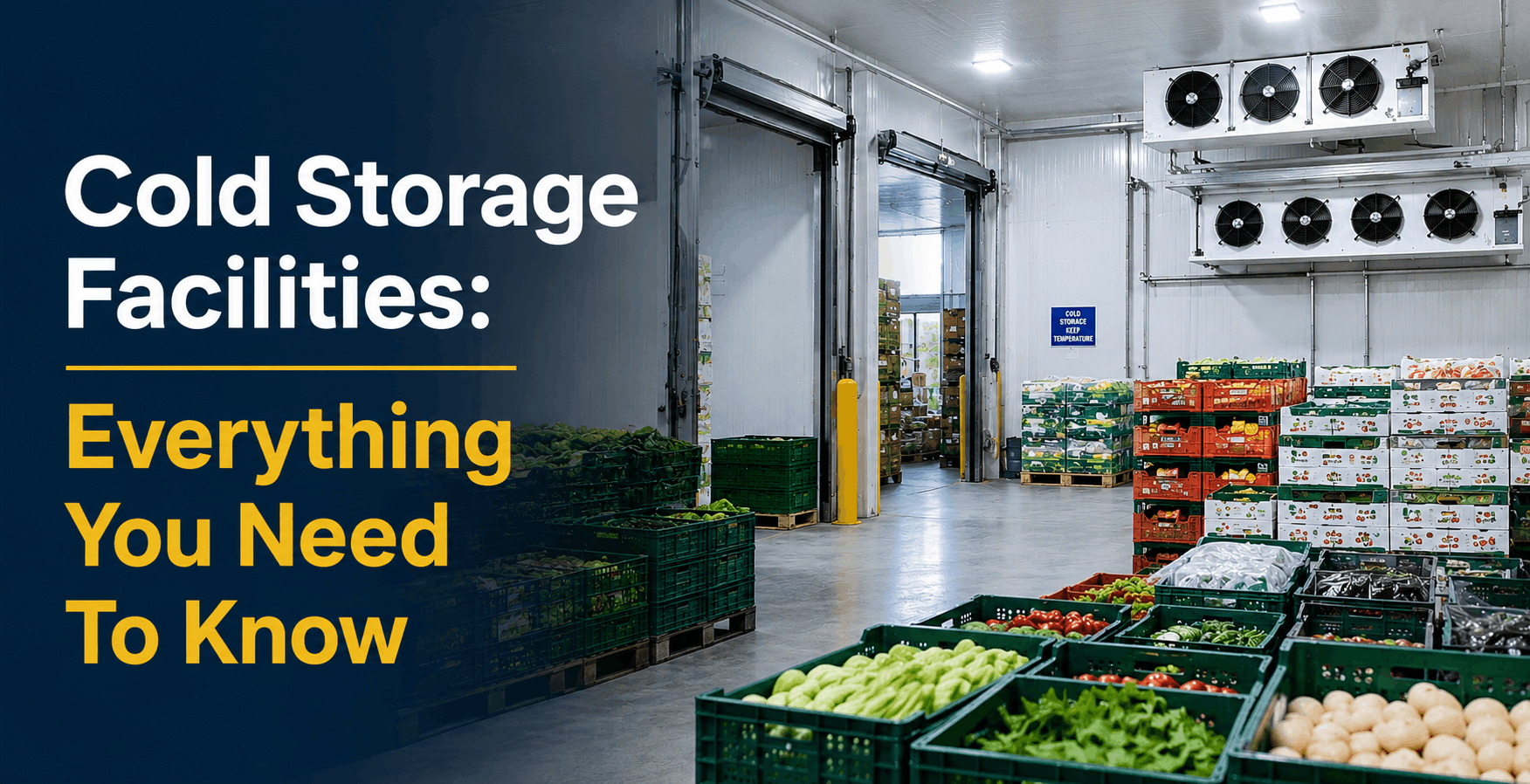
Cold Storage Facilities: Everything You Need To Know
Table of Contents
Introduction
1. What Is a Cold Storage Facility?
2. Why Are Cold Storage Facilities Important?
3. How Does a Cold Storage Facility Work?
4. Types of Cold Storage Facilities
5. Main Components of a Cold Storage Facility
6. Industries That Use Cold Storage Facilities
7. Benefits of Modern Cold Storage Facilities
8. Things To Consider Before Choosing a Cold Storage Facility
9. Challenges in Cold Storage Facilities
10. Future of Cold Storage Facilities
Conclusion
Introduction
In today’s world, keeping products fresh and safe is very important. From fruits and vegetables to medicines and dairy products, many industries depend on proper temperature control. This is where cold storage facilities play an important role.
Cold storage solutions help businesses store products at the right temperature so they stay fresh for a longer time. It reduces wastage, improves quality, and helps products reach customers in the best condition.
In this blog, we will explain everything about cold storage facilities one by one:
-
1. What Is a Cold Storage Facility?
-
2. Why Are Cold Storage Facilities Important?
-
3. How Does a Cold Storage Facility Work?
-
4. Types of Cold Storage Facilities
-
5. Main Components of a Cold Storage Facility
-
6. Industries That Use Cold Storage Facilities
-
7. Benefits of Modern Cold Storage Facilities
-
8. Things To Consider Before Choosing a Cold Storage Facility
-
9. Challenges in Cold Storage Facilities
-
10. Future of Cold Storage Facilities
What Is a Cold Storage Facility?
Cold storage solutions help businesses store products at the right temperature so they stay fresh for a longer time. It reduces wastage, improves quality, and helps products reach customers in the best condition.
Cold storage solutions are commonly used for:
-
1. Fruits and vegetables
-
2. Dairy products
-
3. Frozen foods
-
4. Meat and seafood
-
5. Medicines and vaccines
-
6. Flowers
-
7. Ice cream
-
8. Processed foods
The main purpose of cold storage is to slow down spoilage and maintain product quality.
Why Are Cold Storage Facilities Important?
Without proper storage, many products can spoil quickly. This leads to financial loss for businesses and poor-quality products for customers.
Cold storage facilities help by:
1. Increasing Shelf Life
Products remain fresh for a longer period.
2. Reducing Wastage
Temperature control prevents spoilage and damage.
3. Maintaining Product Quality
Cold storage keeps products fresh, safe, and hygienic.
4. Supporting Transportation
Products can be stored before delivery or export.
5. Helping Seasonal Storage
Farmers and businesses can store seasonal products and sell them later.
How Does a Cold Storage Facility Work?
A cold storage facility works using refrigeration systems that control the temperature inside the storage area.
The basic process includes:
-
1. Cooling the storage room
-
2. Maintaining the required temperature
-
3. Managing humidity levels
-
4. Providing proper air circulation
-
5. Monitoring temperature regularly
Modern cold storage systems also use automated controls and monitoring to improve efficiency.
Types of Cold Storage Facilities
Different products need different temperatures. Because of this, there are several types of cold storage facilities.
1. Refrigerated Storage
These facilities maintain temperatures above the freezing point, usually between 0°C & 10 °C.
Used for:
-
1. Fruits
-
2. Vegetables
-
3. Dairy products
-
4. Beverages
2. Frozen Storage
These facilities keep products below freezing temperature.
Used for:
-
1. Frozen food
-
2. Meat
-
3. Seafood
-
4. Ice cream
3. Blast Freezers
Blast freezers cool products very quickly to maintain freshness and quality.
Used in:
-
1. Food processing industries
-
2. Meat processing units
-
3. Seafood storage
4. Controlled Atmosphere Storage
These facilities control not only temperature but also oxygen and humidity levels.
Used for:
-
1. Apples
-
2. Pears
-
3. Exotic fruits
This helps products stay fresh for several months.
Main Components of a Cold Storage Facility
A cold storage system has several important parts.
1. Insulated Panels
These panels prevent outside heat from entering the storage area.
2. Refrigeration System
This system cools the storage room and maintains the desired temperature.
3. Compressors
Compressors are one of the main parts of the cooling system.
4. Evaporators and Condensers
These help remove heat and maintain cooling.
5. Temperature Monitoring System
Used to check and control temperature continuously.
6. Cold Storage Doors
Special insulated doors reduce temperature loss.
Industries That Use Cold Storage Facilities
Many industries depend on cold storage every day.
1. Food Industry
Restaurants, supermarkets, and food manufacturers use cold storage to keep food fresh.
2. Agriculture Industry
Farmers need a cold storage facility to keep crops, fruits, and vegetables after harvesting.
3. Pharmaceutical Industry
Medicines and vaccines need proper temperature control.
4. Dairy Industry
Milk, butter, cheese, and yogurt require refrigerated storage.
5. Seafood and Meat Industry
Cold storage keeps products safe and hygienic.
Benefits of Modern Cold Storage Facilities
Modern cold storage technology offers many advantages.
1. Energy Efficiency
Advanced systems consume less electricity.
2. Better Temperature Control
Smart systems maintain stable temperatures.
3. Improved Safety
Automated monitoring reduces the risk of spoilage.
4. Environment-Friendly Solutions
Modern refrigeration systems reduce environmental impact.
5. Faster Operations
Efficient storage systems improve loading and unloading speed.
Things To Consider Before Choosing a Cold Storage Facility
If you are planning to use or build a cold storage facility, consider these factors:
1. Storage Capacity
You can choose the right cold storage capacity size based on your business needs.
2. Temperature Requirement
Temperature requirements vary as per the products; different products need different temperatures.
3. Energy Consumption
Energy-efficient systems help reduce operating costs.
4. Location
The facility should be close to transportation routes and markets.
5. Backup Power
Power backup is important to prevent product damage during an electricity failure.
6. Maintenance and Service
Take care of the cold storage facilities from time to time. Regular maintenance ensures smooth operation.
Challenges in Cold Storage Facilities
Although cold storage is very useful, there are some challenges.
1. High Initial Investment
Building a cold storage facility requires significant investment.
2. Electricity Costs
Cooling systems consume large amounts of power.
3. Maintenance Requirements
Refrigeration systems need regular servicing.
4. Temperature Management
Improper temperature control can damage products.
However, with proper planning and modern technology, these challenges can be managed effectively.
Future of Cold Storage Facilities
The demand for cold storage is growing rapidly due to:
-
1. Online grocery delivery
-
2. Frozen food demand
-
3. Pharmaceutical growth
-
4. Food export businesses
-
5. Modern agriculture
New technologies like smart monitoring, automation, and eco-friendly refrigeration systems are making cold storage solutions more efficient and reliable.
Conclusion
Cold storage facilities are an important part of modern businesses and supply chains. They help preserve freshness, reduce wastage, and maintain product quality across many industries.
Whether it is food, medicine, dairy, or agriculture, proper cold storage ensures products remain safe and usable for longer periods.
As industries continue to grow, the need for advanced and energy-efficient cold storage solutions will also increase. Investing in the right cold storage facility can improve business operations, product quality, and customer satisfaction.
To get high-quality and reliable cold storage facilities, you can contact our expert team.
Contact No: +91 9426444495 | +91 9624121156
Email: [email protected]