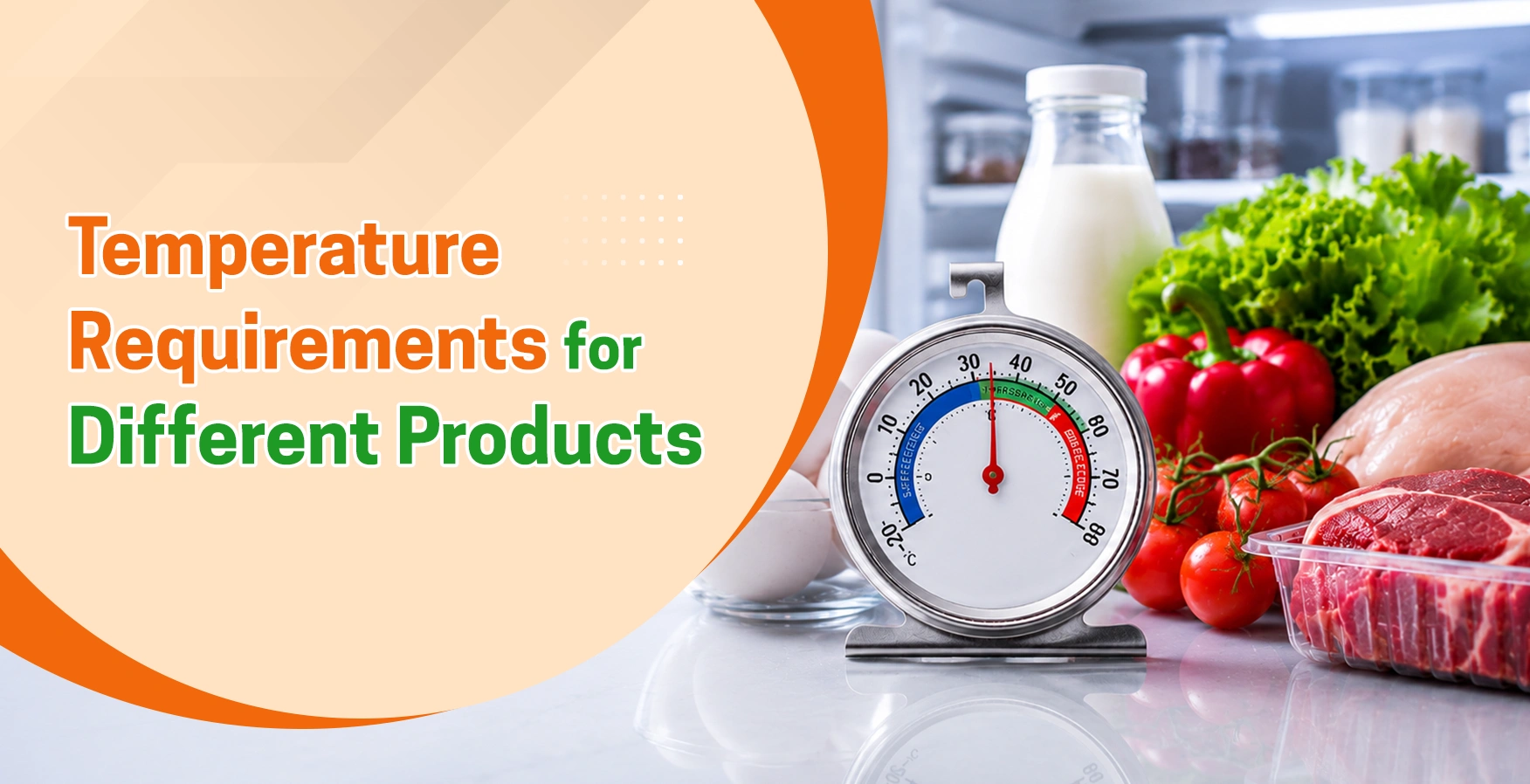
Temperature Requirements for Different Products
Table of Contents
Introduction
Why Temperature Matters So Much
1. Potatoes
2. Apples
3. Oranges and Citrus Fruits
4. Grapes
5. Onions
6. Dairy Products
7. Fresh Vegetables
8. Frozen Foods
9. Meat and Poultry
10. Seafood
11. Pharmaceuticals
Why Stable Temperature Is More Important Than Very Low Temperature
The Challenge for Modern Cold Storages
Temperature Control Protects More Than Products
Final Thoughts
Introduction
The Costly Mistake Many Cold Storage Owners Make
Imagine a farmer bringing potatoes to your cold storage.
A few days later, another customer stores apples.
Then comes a dairy company with butter and cheese.
Next week, someone wants to store frozen foods.
Everything goes into a cold room.
Everything is being cooled.
So everything should be fine, right?
Not always.
One of the biggest misunderstandings in the cold storage industry is believing that all products need the same temperature.
The truth is simple:
Different products need different temperatures.
And when the temperature is wrong, the outcome can be expensive.
Products lose freshness.
Shelf life becomes shorter.
Quality drops.
Customers complain.
In some cases, products can become completely unsellable.
That's why understanding temperature requirements is one of the most important parts of cold storage management.
These are the points we are going to discuss in the blog further.
-
Why Temperature Matters So Much
-
Potatoes
-
Apples
-
Oranges and Citrus Fruits
-
Grapes
-
Onions
-
Dairy Products
-
Fresh Vegetables
-
Frozen Foods
-
Meat and Poultry
-
Seafood
-
Pharmaceuticals
-
Why Stable Temperature Is More Important Than Very Low Temperature
-
The Challenge for Modern Cold Storages
-
Temperature Control Protects More Than Products
Let's understand it in simple words.
Why Temperature Matters So Much
Think about your home refrigerator.
If vegetables become too cold, they can get damaged.
If milk isn't cold enough, it spoils quickly.
The same thing happens on a much larger scale in industrial cold storages.
Every product has its own comfort zone.
When stored within that temperature range:
-
Freshness lasts longer
-
Quality remains better
-
Weight loss is reduced
-
Spoilage decreases
-
Customer satisfaction improves
That's why temperature is not just about cooling.
It's about protecting value.
Potatoes
Recommended Temperature:
2°C to 4°C
Potatoes are among the most commonly stored products in India.
Many people think colder is always better.
But if potatoes become too cold, their internal quality can change.
Proper temperature helps:
-
Maintain quality
-
Reduce sprouting
-
For potato cold storages, stable temperature is extremely important.
Apples
Recommended Temperature:
0°C to 2°C
Apples continue to breathe even after harvesting.
If temperatures are too high, freshness starts reducing quickly.
Proper cooling and storing them in an Apple cold storage helps apples stay fresh, crisp, and attractive for longer periods.
Oranges and Citrus Fruits
Recommended Temperature:
3°C to 8°C
Citrus fruits require cool conditions but should not be excessively chilled.
Maintaining the correct temperature helps preserve:
-
Taste
-
Appearance
-
Shelf life
Grapes
Recommended Temperature:
0°C to 1°C
Grapes are highly sensitive to temperature.
Even small temperature changes can affect quality.
This is especially important for exporters who need products to remain fresh during long transportation periods, and store them in the right cold storage for grapes.
Onions
Recommended Temperature:
0°C to 2°C
Onions require proper cooling and humidity control.
Correct storage conditions help reduce:
-
Sprouting
-
Weight loss
-
Quality deterioration
Storing onions in the correct onion cold storage can be advantageous as it provides the right temperature as much as the onions needs.
Dairy Products
Recommended Temperature:
0°C to 4°C
Milk products are highly sensitive.
Improper temperatures can quickly affect quality and safety.
Products such as:
-
Milk
-
Butter
-
Cheese
-
Cream
Need consistent cooling throughout storage. Dairy product cold storage is important in keeping these products fresh by providing the exact temperature they need.
Fresh Vegetables
Recommended Temperature:
0°C to 10°C
Different vegetables have different requirements.
However, most vegetables benefit from cool and stable storage conditions.
Proper cooling helps maintain:
-
Freshness
-
Appearance
-
Market value
Cold storage for vegetables are very important in keeping these vegetables fresh, after harvesting them to later be provided to wholesalers for sale purpose.
Frozen Foods
Recommended Temperature:
-18°C or Lower
Frozen foods require much lower temperatures than fresh produce.
Examples include:
-
Frozen vegetables
-
Ice cream
-
Frozen meat
-
Frozen seafood
If temperatures rise, product quality can suffer.
That's why frozen food refrigeration systems require highly reliable refrigeration systems.
Meat and Poultry
Recommended Temperature:
0°C to 4°C (Fresh)
-18°C (Frozen)
Temperature control directly affects product quality and shelf life.
Even small temperature fluctuations can impact freshness.
For meat processors and distributors, reliable cooling is critical. Meat and poultry cold storage is very important to keep freshness.
Seafood
Recommended Temperature:
0°C to 2°C (Fresh)
-18°C (Frozen)
Seafood is one of the most temperature-sensitive products. So seafood cold storage is important to keep them fresh, texture and taste.
Maintaining proper cooling helps preserve:
-
Freshness
-
Texture
-
Product quality
This is especially important during transportation and export operations.
Pharmaceuticals
Recommended Temperature:
Usually 2°C to 8°C
Many medicines require strict temperature control.
Improper storage can reduce effectiveness and create significant losses.
That's why pharmaceutical cold storage facilities use carefully controlled refrigeration systems.
Why Stable Temperature Is More Important Than Very Low Temperature
Many people believe: The colder, the better.
But that's not always true.
Every product has an ideal storage temperature.
Going below that temperature can sometimes cause damage instead of protection.
The goal is not to create the coldest environment.
The goal is to create the right environment.
This is where good refrigeration design becomes important.
The Challenge for Modern Cold Storages
Today's Eco friendly cold storage containers operators are handling many different products.
Each product has different requirements.
This creates a challenge:
How do you maintain the right temperature while keeping electricity costs under control?
Modern refrigeration technologies help solve this problem by providing:
-
Better temperature control
-
Improved efficiency
-
Consistent cooling performance
-
Lower operational risks
Many businesses are also exploring natural refrigerants and CO₂ refrigeration systems as part of their long-term cooling strategy.
Temperature Control Protects More Than Products
When temperatures are maintained properly:
You don't just protect fruits, vegetables, dairy products, or frozen foods.
You protect:
-
Revenue
-
Customer trust
-
Product quality
-
Business reputation
Every degree matters.
Because in cold storage, a small temperature mistake can become a big financial loss.
Final Thoughts
Different products have different temperature requirements.
There is no single temperature that works for everything.
Understanding the right storage conditions helps businesses reduce spoilage, maintain quality, and improve profitability.
Whether you're storing potatoes, fruits, dairy products, frozen foods, seafood, or pharmaceuticals, proper temperature management is one of the most important factors in successful cold storage operations.
Because good refrigeration isn't just about creating cold temperatures.
It's about creating the right temperatures.
Looking for Reliable Cold Storage Solutions?
At Nandi Koti, we help businesses develop efficient cold storage and refrigeration solutions designed to maintain the right temperatures for every product.
Talk to our team today to explore modern cooling technologies, CO₂ refrigeration systems, and cold storage solutions built for the future.
Talk to an expert
Contact Us: +91 9426444495 | +91 9624121156
Email: [email protected]
Table of Contents
Introduction
Why Temperature Matters So Much
1. Potatoes
2. Apples
3. Oranges and Citrus Fruits
4. Grapes
5. Onions
6. Dairy Products
7. Fresh Vegetables
8. Frozen Foods
9. Meat and Poultry
10. Seafood
11. Pharmaceuticals
Why Stable Temperature Is More Important Than Very Low Temperature
The Challenge for Modern Cold Storages
Temperature Control Protects More Than Products
Final Thoughts
Introduction
The Costly Mistake Many Cold Storage Owners Make
Imagine a farmer bringing potatoes to your cold storage.
A few days later, another customer stores apples.
Then comes a dairy company with butter and cheese.
Next week, someone wants to store frozen foods.
Everything goes into a cold room.
Everything is being cooled.
So everything should be fine, right?
Not always.
One of the biggest misunderstandings in the cold storage industry is believing that all products need the same temperature.
The truth is simple:
Different products need different temperatures.
And when the temperature is wrong, the outcome can be expensive.
Products lose freshness.
Shelf life becomes shorter.
Quality drops.
Customers complain.
In some cases, products can become completely unsellable.
That's why understanding temperature requirements is one of the most important parts of cold storage management.
These are the points we are going to discuss in the blog further.
-
Why Temperature Matters So Much
-
Potatoes
-
Apples
-
Oranges and Citrus Fruits
-
Grapes
-
Onions
-
Dairy Products
-
Fresh Vegetables
-
Frozen Foods
-
Meat and Poultry
-
Seafood
-
Pharmaceuticals
-
Why Stable Temperature Is More Important Than Very Low Temperature
-
The Challenge for Modern Cold Storages
-
Temperature Control Protects More Than Products
Let's understand it in simple words.
Why Temperature Matters So Much
Think about your home refrigerator.
If vegetables become too cold, they can get damaged.
If milk isn't cold enough, it spoils quickly.
The same thing happens on a much larger scale in industrial cold storages.
Every product has its own comfort zone.
When stored within that temperature range:
-
Freshness lasts longer
-
Quality remains better
-
Weight loss is reduced
-
Spoilage decreases
-
Customer satisfaction improves
That's why temperature is not just about cooling.
It's about protecting value.
Potatoes
Recommended Temperature:
2°C to 4°C
Potatoes are among the most commonly stored products in India.
Many people think colder is always better.
But if potatoes become too cold, their internal quality can change.
Proper temperature helps:
-
Maintain quality
-
Reduce sprouting
For potato cold storages, stable temperature is extremely important.
Apples
Recommended Temperature:
0°C to 2°C
Apples continue to breathe even after harvesting.
If temperatures are too high, freshness starts reducing quickly.
Proper cooling and storing them in an Apple cold storage helps apples stay fresh, crisp, and attractive for longer periods.
Oranges and Citrus Fruits
Recommended Temperature:
3°C to 8°C
Citrus fruits require cool conditions but should not be excessively chilled.
Maintaining the correct temperature helps preserve:
-
Taste
-
Appearance
-
Shelf life
Grapes
Recommended Temperature:
0°C to 1°C
Grapes are highly sensitive to temperature.
Even small temperature changes can affect quality.
This is especially important for exporters who need products to remain fresh during long transportation periods, and store them in the right cold storage for grapes.
Onions
Recommended Temperature:
0°C to 2°C
Onions require proper cooling and humidity control.
Correct storage conditions help reduce:
-
Sprouting
-
Weight loss
-
Quality deterioration
Storing onions in the correct onion cold storage can be advantageous as it provides the right temperature as much as the onions needs.
Dairy Products
Recommended Temperature:
0°C to 4°C
Milk products are highly sensitive.
Improper temperatures can quickly affect quality and safety.
Products such as:
-
Milk
-
Butter
-
Cheese
-
Cream
Need consistent cooling throughout storage. Dairy product cold storage is important in keeping these products fresh by providing the exact temperature they need.
Fresh Vegetables
Recommended Temperature:
0°C to 10°C
Different vegetables have different requirements.
However, most vegetables benefit from cool and stable storage conditions.
Proper cooling helps maintain:
-
Freshness
-
Appearance
-
Market value
Cold storage for vegetables are very important in keeping these vegetables fresh, after harvesting them to later be provided to wholesalers for sale purpose.
Frozen Foods
Recommended Temperature:
-18°C or Lower
Frozen foods require much lower temperatures than fresh produce.
Examples include:
-
Frozen vegetables
-
Ice cream
-
Frozen meat
-
Frozen seafood
If temperatures rise, product quality can suffer.
That's why frozen food refrigeration systems require highly reliable refrigeration systems.
Meat and Poultry
Recommended Temperature:
0°C to 4°C (Fresh)
-18°C (Frozen)
Temperature control directly affects product quality and shelf life.
Even small temperature fluctuations can impact freshness.
For meat processors and distributors, reliable cooling is critical. Meat and poultry cold storage is very important to keep freshness.
Seafood
Recommended Temperature:
0°C to 2°C (Fresh)
-18°C (Frozen)
Seafood is one of the most temperature-sensitive products. So seafood cold storage is important to keep them fresh, texture and taste.
Maintaining proper cooling helps preserve:
-
Freshness
-
Texture
-
Product quality
This is especially important during transportation and export operations.
Pharmaceuticals
Recommended Temperature:
Usually 2°C to 8°C
Many medicines require strict temperature control.
Improper storage can reduce effectiveness and create significant losses.
That's why pharmaceutical cold storage facilities use carefully controlled refrigeration systems.
Why Stable Temperature Is More Important Than Very Low Temperature
Many people believe: The colder, the better.
But that's not always true.
Every product has an ideal storage temperature.
Going below that temperature can sometimes cause damage instead of protection.
The goal is not to create the coldest environment.
The goal is to create the right environment.
This is where good refrigeration design becomes important.
The Challenge for Modern Cold Storages
Today's Eco friendly cold storage containers operators are handling many different products.
Each product has different requirements.
This creates a challenge:
How do you maintain the right temperature while keeping electricity costs under control?
Modern refrigeration technologies help solve this problem by providing:
-
Better temperature control
-
Improved efficiency
-
Consistent cooling performance
-
Lower operational risks
Many businesses are also exploring natural refrigerants and CO₂ refrigeration systems as part of their long-term cooling strategy.
Temperature Control Protects More Than Products
When temperatures are maintained properly:
You don't just protect fruits, vegetables, dairy products, or frozen foods.
You protect:
-
Revenue
-
Customer trust
-
Product quality
-
Business reputation
Every degree matters.
Because in cold storage, a small temperature mistake can become a big financial loss.
Final Thoughts
Different products have different temperature requirements.
There is no single temperature that works for everything.
Understanding the right storage conditions helps businesses reduce spoilage, maintain quality, and improve profitability.
Whether you're storing potatoes, fruits, dairy products, frozen foods, seafood, or pharmaceuticals, proper temperature management is one of the most important factors in successful cold storage operations.
Because good refrigeration isn't just about creating cold temperatures.
It's about creating the right temperatures.
Looking for Reliable Cold Storage Solutions?
At Nandi Koti, we help businesses develop efficient cold storage and refrigeration solutions designed to maintain the right temperatures for every product.
Talk to our team today to explore modern cooling technologies, CO₂ refrigeration systems, and cold storage solutions built for the future.
Talk to an expert
Contact Us: +91 9426444495 | +91 9624121156
Email: [email protected]